



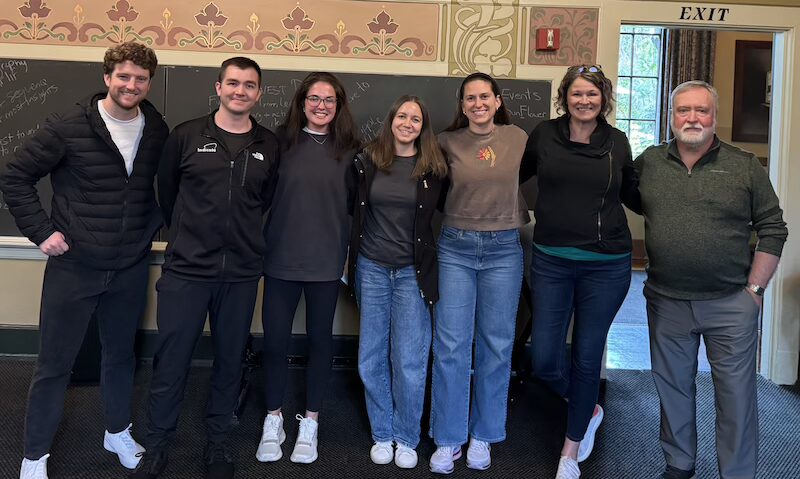
Back in May, I attended the Fundamentals of True Wealth training hosted by Money Quotient, an organization whose framework we utilize here at Tamarind Financial Planning.
People often seek out a financial planner when a major life event occurs, or when their daily financial decisions feel out of alignment with their core values. Money Quotient provides us with the practical tools to help bridge that gap, facilitating clear movement toward your true financial life goals. The first tools we share with prospective clients are the Financial Satisfaction and Life Transition surveys. These exercises give both the planner and the client an immediate, clear snapshot of what matters most right now. Click to try!
Let’s face it: money is a difficult topic to talk about (often more uncomfortable than politics or other taboo subjects). Starting with a structured survey is much easier than trying to pour out everything that keeps you up at night all at once. These tools can be incredibly effective when you are grappling with a big decision or trying to bring a vague goal into focus. One tool we frequently use is called the Wheel of Life. As part of my training, the attendees practiced using these tools with each other – one played the role of financial life planner and one the client. Here is what my personal wheel looked like a couple of months ago:

As a planner, my goal with this exercise isn’t to judge whether a score is “good” or “bad.” It is simply a visual way to identify which areas of your life bring satisfaction and which might need attention. If you do want to make changes, those shifts often carry financial implications. More importantly, discussing these results with your planner uncovers what truly matters to you across your past, present, and future.
To give you an example of how this connects to financial planning, look at my own focus on leisure and health. I currently play roller hockey on Wednesday nights, but I would love to add a Sunday game to my routine. Unfortunately, I am still a few years shy of the “old-timers” league, which is the only Sunday option at my local rink (The Plex).
Because this is a long-term personal goal, I am writing it into my financial plan now: starting at age 35 and continuing for as long as I am physically capable. Until then, I need to find a bridge activity (maybe it’s finally time to join my dad’s ice hockey team – he’s still playing at age 70!)
Planning for life’s big adventures is the first thing you see when you visit our website. It is also the exact reason I first reached out to Emilie and Ariadne when I began my career transition into financial planning. Technical skills like tax optimization and investment allocations are vital, but at the end of the day, true success is knowing you spent your time doing what you wanted to do, becoming who you wanted to become, and supporting the life you wanted to live.
For those curious about what’s next for me, I will continue mastering these communication and planning tools alongside my peers during the advanced phase of Money Quotient Financial Life Planning training, which kicks off this September.